If your mental image of a manufactured home still comes from the 1970s, featuring thin walls, aluminum siding, and narrow lots packed closely together, the skepticism is understandable. That version of manufactured housing certainly existed, but it stopped reflecting the reality of the industry decades ago.
The manufactured homes being built today are a different product: HUD-code construction, modern floor plans, drywall interiors, energy-efficient systems, and finishes that match what you'd find in any site-built home at a comparable price point. Here are the six myths we hear most often, and what's actually true.
Myth 1: "Manufactured Homes Are Just Mobile Homes"
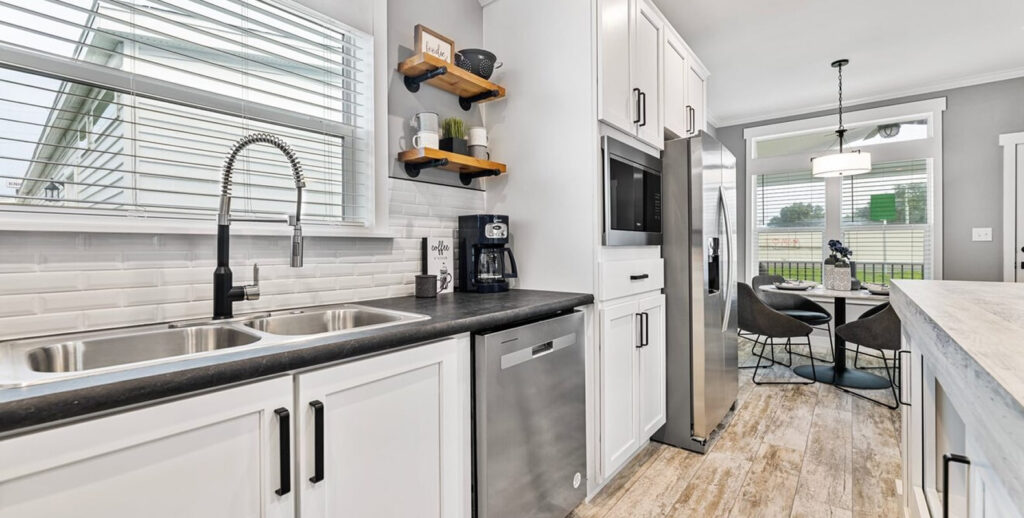
Manufactured homes in 2026 are much different from those of 50 years ago.
This is the most persistent misconception, and it has a specific origin. Before 1976, factory-built homes were constructed without any federal standards and were known as mobile homes, existing with this design in mind. Quality varied wildly. The stigma from that era is real and earned.
After 1976, everything changed. The National Manufactured Housing Construction and Safety Standards Act, known as the HUD Code, established federal requirements for structure, fire safety, energy efficiency, plumbing, and electrical systems. Homes built under these standards are legally classified as manufactured homes, not mobile homes. They are built on permanent steel chassis, installed on prepared sites, and designed for permanent occupancy. Calling a 2026 manufactured home a "mobile home" is like calling a smartphone a rotary dial telephone. Same general category, entirely different product. For the full history, see HUD's manufactured housing page.
Myth 2: "The Quality Is Poor Compared to Site-Built Homes"
This myth usually comes from people who haven't been inside a modern manufactured home. Walk into a Silver Bay home today and you'll find drywall throughout, not paneling. Pitched rooflines. Open-concept layouts with eight- and nine-foot ceilings. Real cabinetry, countertops, and fixtures with the same brands you'd see in a builder-grade site-built home.
The construction method also has genuine advantages over site-built. Factory construction happens in a controlled indoor environment; this means no lumber warping in the rain and no materials sitting on an open job site. The same crew performs the same operations repeatedly, which makes quality control systematic rather than variable. HUD-certified inspectors are present during construction, not just reviewing finished homes. The result is a consistently built product with documented inspection at every stage. See Silver Bay's available floor plans.
Myth 3: "They Can't Handle Florida Weather"
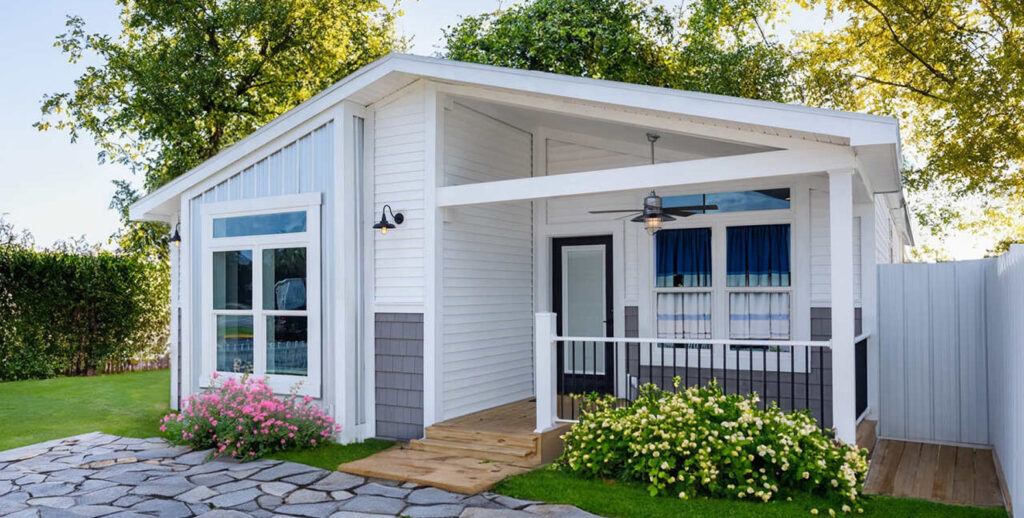
Silver Bay manufactured homes are built for Florida weather.
Florida has some of the most demanding residential wind standards in the country, and manufactured homes built for installation here are required to meet them. The HUD Code includes wind zone designations: homes installed in Florida must meet Zone 2 or Zone 3 standards, designed specifically for hurricane-prone coastal and near-coastal environments. Anchoring systems are engineered to keep the home on its foundation during high-wind events. This is a regulated, inspected requirement, not an optional upgrade.
Myth 4: "You Don't Really Own It"
At Silver Bay, you own your home outright. What you lease is the lot it sits on. This is the land-lease model, and it's worth understanding clearly because it's often misunderstood. You receive a deed for your home, with the option for a mortgage payment or cash purchase, just like any home. The lot lease is separate: it's your monthly lot rent, which covers lawn care, community amenities, and common area maintenance.
This is not a rental arrangement. You own the home. What the land-lease model does is lower the entry cost. Since you’re not buying the land, you're not paying for it up front or carrying it in your property taxes; for a breakdown of what lot rent includes and how it compares to HOA fees and property taxes, see the article on what lot rent includes.
Myth 5: "They Lose Value Immediately"
This one deserves a nuanced answer rather than a flat denial. Value behavior for manufactured homes in land-leased communities is influenced by the same factors that affect any home: community quality, management standards, home condition, and the local market. It is not accurate that manufactured homes automatically depreciate; that pattern was associated with older, pre-HUD homes in poorly managed communities.
In well-maintained communities with strong management and consistent standards, manufactured homes have generally been tracked with broader housing market trends over the past decade. The quality of the community matters significantly. Silver Bay's community standards include maintained landscaping, regulated aesthetics, and active management; all to protect the environment that supports home values. Our sister community Villa Farms has been operating under the same ownership for years and has maintained the kind of established, attractive community that supports long-term property quality. That track record is worth asking about when you visit.
Myth 6: "55+ Manufactured Home Communities Aren't Nice Places to Live"
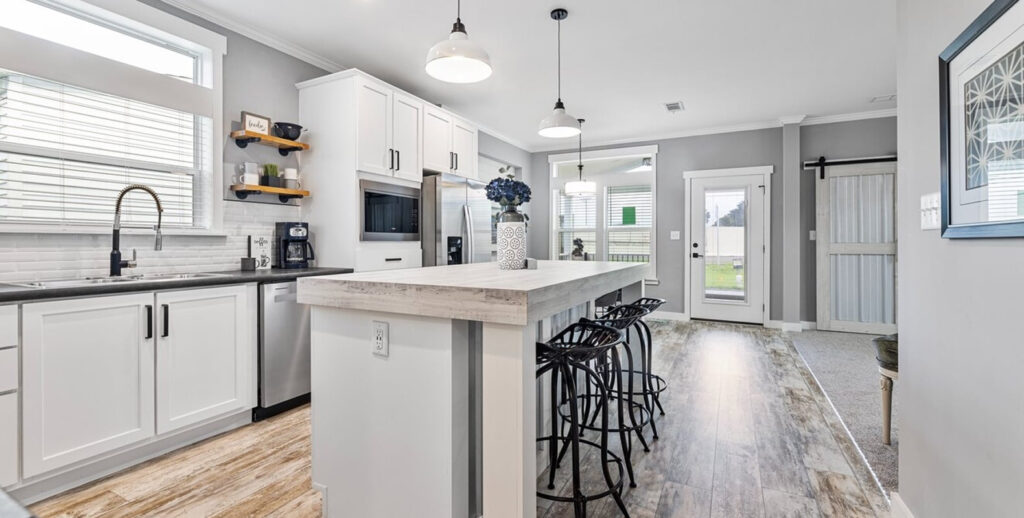
HUD regulations have made manufactured homes indistinguishable in quality and appearance from site-built homes.
This is the one that disappears fastest after a tour.
Silver Bay's amenities include a resort-style pool, a private clubhouse with a social calendar, beautifully maintained common areas and green spaces, and onsite handyman services for minor home repairs. The Silver Bay floor plans run from 1,029 to 1,600 square feet across nine options, with modern finishes and full customization. Residents choose their own flooring, cabinetry, countertops, and fixtures; you're not inheriting someone else's choices.
What people most often say after they visit is that it looks nothing like what they expected. That's not a coincidence, it's the gap between the stigma and the reality. The stigma was built on what these communities looked like forty years ago. What you'll see at Silver Bay is what they look like now.
Summary
The manufactured home myths that most retirees still carry were built on genuine observations about a product that no longer exists. Pre-1976 mobile homes were poorly built and poorly regulated. Since the HUD Code took effect, manufactured homes have been federally regulated, factory-inspected, and increasingly indistinguishable in quality and appearance from site-built homes at a comparable price point. At Silver Bay Palatka, residents own their homes outright in a land-lease community with resort-style amenities, modern floor plans, and Florida wind-zone-compliant construction. The best way to close the gap between perception and reality is to walk through a finished home in person. See our floor plans and home options, then schedule a tour and see for yourself.
Frequently Asked Questions
Is a manufactured home a real home?
Yes. A manufactured home is a permanent residential dwelling built to federal HUD Code standards, installed on a prepared site, and designed for long-term occupancy. It is legally classified as real property when titled as such and can be bought, sold, inherited, and financed like any other home.
Are manufactured homes safe to live in?
Modern manufactured homes built to HUD Code are designed and inspected for structural integrity, fire safety, electrical safety, and weather resistance. Homes built for Florida installation meet state-specific wind zone requirements. They are inspected during the manufacturing process by HUD-certified inspectors, a level of oversight that site-built homes don't always receive.
Can I get a mortgage for a manufactured home?
Yes. Several lenders specialize in manufactured home financing, and loans are available for both the home alone and, in some cases, home and land together. Financing options vary depending on the community type and how the home is titled. When you tour Silver Bay, ask us about financing - we can point you toward lenders who work with manufactured home buyers regularly.
Do manufactured homes qualify for homestead exemption in Florida?
Yes, Florida's homestead exemption applies to manufactured homes that are permanently affixed to land and meet the state's requirements for permanent residency. In a land-lease community like Silver Bay, exemption eligibility depends on how the home is titled. A tax advisor or the St. Johns County Property Appraiser's office can confirm the specifics for your situation.
What is the difference between a manufactured home and a modular home?
Both are factory-built, but to different regulatory standards. A manufactured home is built to the federal HUD Code and remains classified as personal property unless permanently titled to land. A modular home is built in sections to local building codes, assembled on-site, and typically classified as real property from the start. Both are legitimate permanent residences, the difference is regulatory framework and financing treatment, not quality.
The best thing to do with a list of myths is compare them to what you see. Schedule a tour at Silver Bay and we'll show you through a finished home, walk you around the community, and answer every question you have without any pressure to decide on the spot.