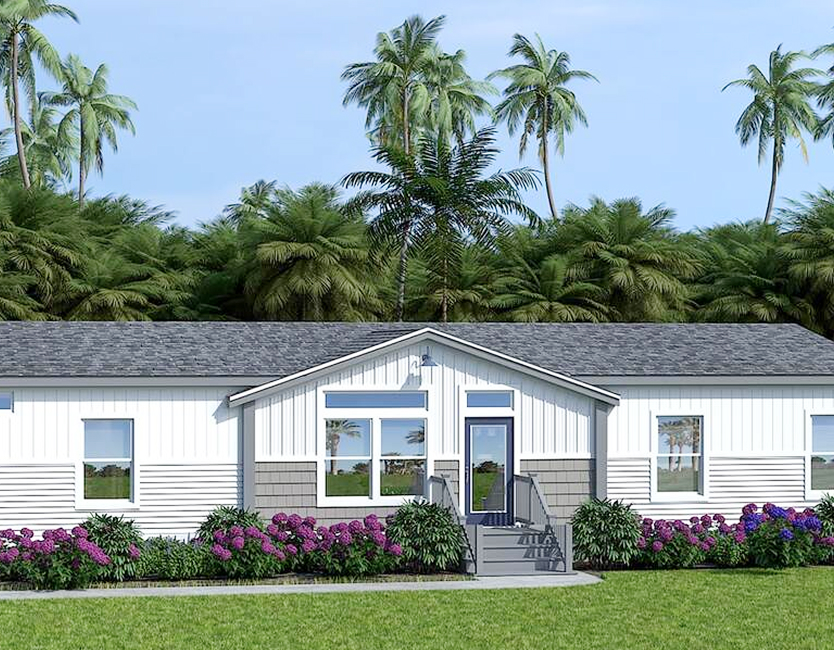
Digital mockup - exterior View of manufactured home
When most people hear manufactured home, what comes to mind is about fifty years out of date. The narrow box, the aluminum siding, the thin walls that didn't keep out much weather or noise. That picture is real, it describes what the industry produced in the 1970s. It has almost nothing to do with what modern manufactured homes in Florida look like today.
The disconnect between the perception and the reality is significant enough that it's causing genuinely good housing options to get ruled out before they're even seriously considered. This guide covers what modern manufactured homes actually are in 2026, how they're built, what quality looks like in practice, and why they're worth serious consideration for retirees who want a well-built home without the overhead of traditional ownership.
What Is a Manufactured Home?
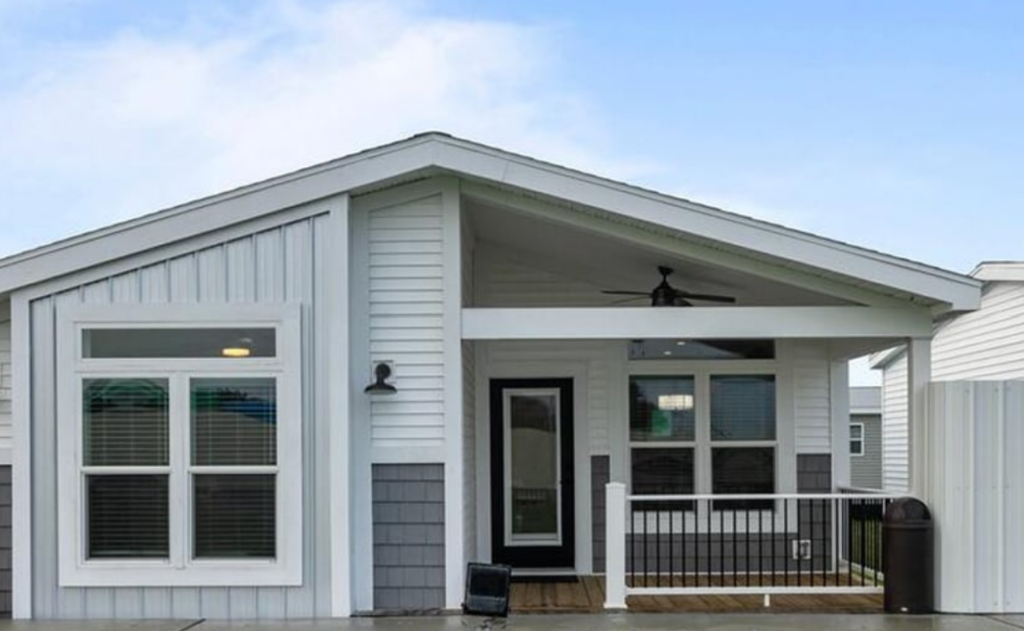
Exterior view of a Silver Bay Palatka manufactured home: Cottage Farmhouse
A manufactured home is a residential dwelling built entirely in a factory setting, constructed to federal standards set by the U.S. Department of Housing and Urban Development, and then transported to its permanent site for installation. That's the official definition, and the HUD Code is what separates a modern manufactured home from anything that came before it.
Manufactured homes are sometimes confused with modular homes and RVs. They're not the same. A modular home is also factory-built, but it's assembled in sections and constructed to local building codes rather than federal HUD standards. An RV is a vehicle designed for temporary occupancy: it's not classified as a home and doesn't meet residential construction standards. A manufactured home is a permanent residence built to a national federal code. If you want the specifics, HUD's manufactured housing page is the authoritative source.
How HUD Standards Changed Everything
The National Manufactured Housing Construction and Safety Standards Act of 1974, known as the HUD Code, was the turning point. Before 1974, there were no federal standards for factory-built housing. Quality varied wildly depending on the manufacturer, and the stigma that built up around that era was earned. After 1974, that changed.
The HUD Code establishes mandatory standards for structural engineering, fire safety, energy efficiency, plumbing, electrical systems, and thermal insulation. These aren't voluntary guidelines: they're federal requirements enforced through inspections at the factory before the home leaves the facility. Every manufactured home built since 1976 carries a HUD certification label, which is the equivalent of a certificate of occupancy for a site-built home.
The standards have been updated multiple times since 1976. Energy efficiency requirements particularly have been significantly strengthened. Wind resistance standards vary by region: homes built for Florida meet Zone 2 or Zone 3 wind standards, which are considerably more stringent than what earlier construction required.
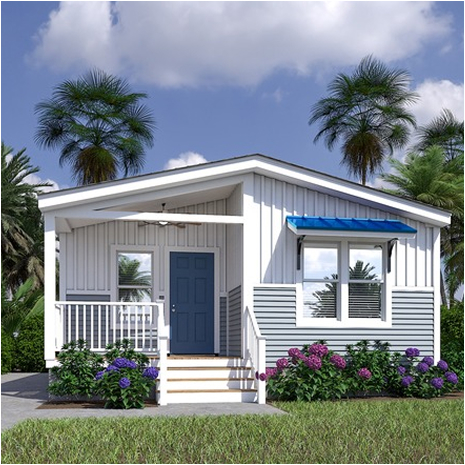
Exterior view of Hayden style manufactured home.
What Modern Manufactured Homes Actually Look Like in 2026
The visual gap between a 1970s manufactured home and what's being built now is not a minor upgrade, it's a different category of product. Here's what you're looking at in a modern manufactured home:
Open-concept floor plans with genuine living space. Modern designs prioritize how people actually use their homes, with connected kitchen, dining, and living areas rather than chopped-up rooms. Drywall throughout, not paneling. This is standard now, and it matters for both appearance and acoustic performance. Pitched rooflines rather than flat roofs. Energy-efficient windows with modern framing. Full-size kitchen and bathroom fixtures, including real cabinetry, countertops, and appliances that match what you'd find in any site-built home at a similar price point.
At Silver Bay, homes range from 1,029 to 1,600 square feet across nine floor plans: the Pierce, Alexa, Hayden, Cottage Farmhouse, Colby, Ryan, and Silver Springs Series, among others. These are two- and three-bedroom homes with two bathrooms, designed for independent retirees who want a well-appointed home without excess space to maintain. You can explore all Silver Bay floor plans and home options to see the full range.
Construction Quality: What You're Actually Getting
One of the consistent advantages of factory-built construction is the controlled environment. Site-built homes are exposed to the elements during construction, whether lumber warps during the rain, materials sitting on open job sites, and the quality of execution depends on who shows up that day. Factory construction doesn't have those variables.
In a manufacturing facility, materials are stored indoors, climate is controlled, and the construction sequence is standardized. The same crew performs the same operations repeatedly, which means quality control is continuous rather than inspected at the end. HUD-certified inspectors are present in the facility, not just reviewing finished homes. This means problems are caught during construction, not after installation.
The framing standards for manufactured homes built to HUD Code are comparable to site-built residential construction. The idea that manufactured homes are "less structural" than site-built homes was true of pre-HUD construction and hasn't been accurate for fifty years.
Energy Efficiency in Modern Manufactured Homes
Energy efficiency is one area where modern manufactured homes have made the most significant advances. Current HUD standards require insulation levels that meet or exceed what many older site-built homes achieve, and manufacturers competing for buyers have gone further than the minimum in many cases.
Modern manufactured homes typically feature insulated wall systems, energy-efficient windows with low-E coatings, and HVAC systems sized appropriately for the home's square footage. In Florida's climate, where cooling costs are the primary driver of utility bills, right-sized HVAC and proper insulation matter considerably. Energy Star certification is available for qualifying manufactured homes, the same certification program that applies to site-built homes.
Customization at Silver Bay: How the Process Works
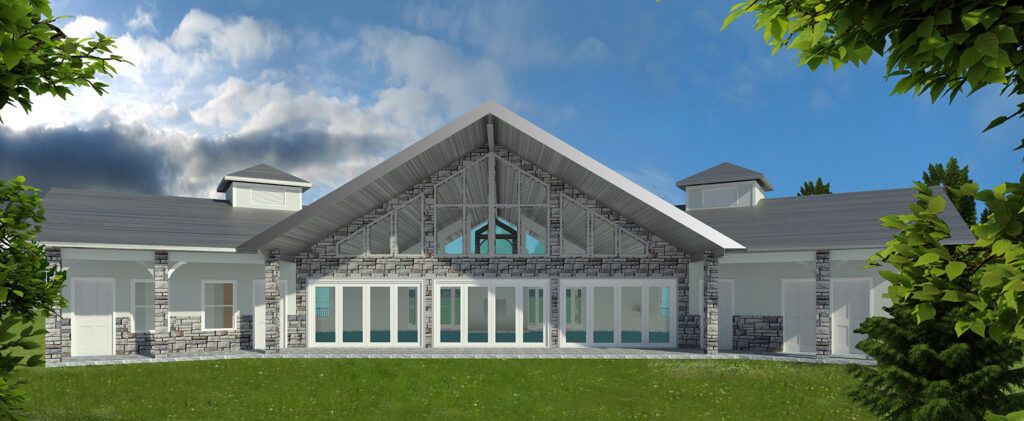
Digital mockup of the clubhouse and social center.
One of the questions people most often have about manufactured homes is whether you can make them your own. At Silver Bay, the answer is yes. The process works like this: you choose from Silver Bay's floor plan options, then select your finishes: flooring, cabinetry, countertops, fixtures, exterior colors. The home is then built to those specifications at the factory and installed on your lot in the community.
This is a meaningful distinction from buying an existing home. You're not inheriting someone else's choices and living with their carpet and their cabinet hardware. You're starting from a floor plan and making it yours. Once the home is installed and you're in, it's maintained by you internally and the exterior community environment, lawn care, and amenities are handled by Silver Bay as part of your lot rent.
Common Questions About Manufactured Home Quality
Do they hold their value?
This is more nuanced than a simple yes or no. In a land-lease community, a manufactured home's value is influenced by the community itself, market conditions, and the home's condition, similar to how a condo's value is partly a function of the building. Well-maintained homes in established communities with strong management tend to hold value better than homes in poorly managed ones. The general pattern over the past decade has been appreciation, not depreciation, for well-situated manufactured homes.
Are they built to last?
Modern manufactured homes built to HUD Code are built for permanent occupancy and long-term use. With normal maintenance, a manufactured home built today should last as long as any site-built home at a comparable quality level. The key phrase is "with normal maintenance", which applies equally to any home.
What about storms in Florida?
Manufactured homes built for installation in Florida are required to meet Zone 2 or Zone 3 wind resistance standards under the HUD Code. These are Florida-specific requirements that account for the state's hurricane exposure. Anchoring systems are engineered to keep the home on its foundation during high-wind events. This is regulated and inspected, not left to the builder's judgment.
Summary
Modern manufactured homes in Florida in 2026 are HUD-compliant, factory-built residences that look and function like traditional site-built homes, with open floor plans, drywall interiors, energy-efficient systems, and full customization options. The stigma attached to manufactured homes dates to pre-1974 construction and hasn't reflected the actual product for fifty years. At Silver Bay Palatka, homes range from 1,029 to 1,600 square feet across nine floor plans, with prices and a construction process that gives buyers a new, customized home without the price of traditional land-and-home ownership.
Frequently Asked Questions
Are manufactured homes the same as mobile homes?
No. "Mobile home" technically refers to factory-built homes constructed before June 15, 1976, when the federal HUD Code took effect. Homes built after that date are classified as manufactured homes and must meet federal construction and safety standards. The two terms are sometimes used interchangeably in casual conversation, but they describe different products built to different standards in different eras.
Are manufactured homes built to code?
Yes, to federal code specifically. Manufactured homes are built to the HUD Code (the National Manufactured Housing Construction and Safety Standards), which covers structural engineering, fire safety, energy efficiency, plumbing, and electrical systems. This is a national standard, enforced by HUD-approved inspectors during the manufacturing process. More information is available at HUD.gov.
How long do manufactured homes last?
A well-maintained manufactured home built to modern HUD standards is designed for permanent, long-term occupancy - comparable in lifespan to site-built homes at a similar quality level. Like any home, longevity depends on the quality of construction, the level of maintenance, and the environment. Homes in Florida's climate benefit from features like hurricane-rated construction and proper HVAC sizing that support long-term durability.
Can manufactured homes withstand Florida weather?
Manufactured homes installed in Florida are required to meet Florida-specific wind resistance standards under the HUD Code. Anchoring systems are engineered for the state's wind exposure. This is a regulated requirement, not an optional upgrade. Modern manufactured homes in Florida are designed and built specifically for the climate they'll be installed in.
Do manufactured homes appreciate in value?
Value behavior for manufactured homes in land-lease communities depends on community quality, market conditions, home condition, and location, very similar to how condo values work. The long-term trend over the past decade has generally been positive for well-situated manufactured homes. The Manufactured Housing Institute and U.S. Census Bureau track manufactured housing market data for anyone who wants to research the category more deeply.
What is the difference between a manufactured home and a modular home?
Both are factory-built, but they're built to different standards. A manufactured home is built to the federal HUD Code. A modular home is built in sections and assembled on-site to local building codes, which vary by jurisdiction. Both are legitimate permanent residences, but the difference is primarily in the regulatory framework and construction method.
Are manufactured homes a good investment for retirement?
For retirees who want a well-built home with lower entry cost, predictable monthly expenses through a land-lease model, and community amenities without the overhead of traditional homeownership, manufactured homes in 55+ communities are worth serious consideration. The math on lot rent compared to HOA fees and property taxes is one concrete place to start the comparison.
If you're ready to see what the product actually looks like in person, the best next step is a visit. Explore Silver Bay's floor plans online, then schedule a tour to walk through a finished home and ask your questions face to face.