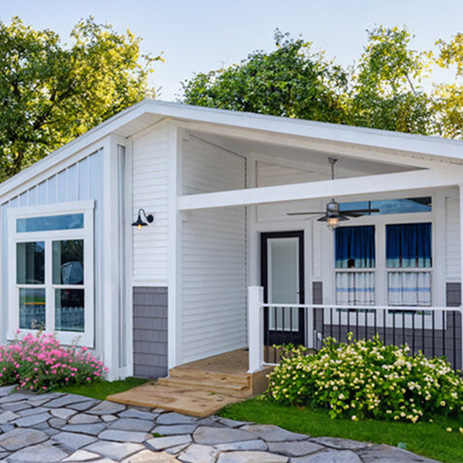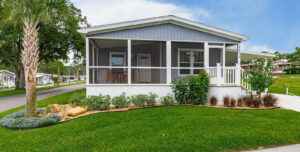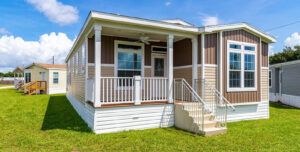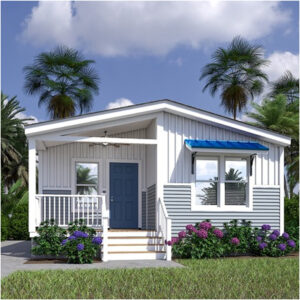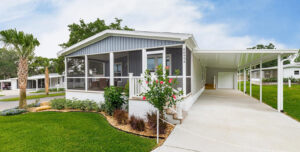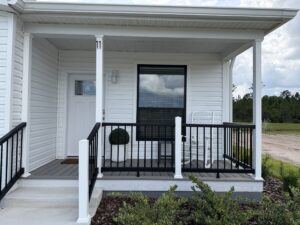
A Silver Bay home with a front porch that makes it easy to start the morning at home before heading out for the day.
You've probably already looked through the floor plans and browsed the amenities. Now let's skip the brochure language and spend a week at Silver Bay. What does a regular Monday feel like? Where do people end up when nobody has made plans? What happens when the grandkids come to visit?
Experiences from residents at our sister community, Villa Farms, give us a real sense of those everyday moments. Their stories about the walking paths, clubhouse, fire pit, friendships, and having less home maintenance on the to-do list bring those everyday moments to life. Think of this as a peek into those ordinary days, small routines, and spontaneous plans that give a community its personality.
Monday Morning

A morning walk with the dog turns an ordinary Monday into time to enjoy the outdoors and catch up with a neighbor.
Monday doesn't have to mean jumping straight into a list of chores. Maybe the morning starts with coffee at the clubhouse, followed by a walk with the dog along the community's walking paths. You have somewhere to be, but there's no rush.
The lawn isn't waiting on you, either. With yard work off the calendar, the morning feels more open. A walk turns into a conversation with a neighbor, or maybe even another coffee run at the clubhouse to chat longer. Instead of spending the first few hours of the week mowing, trimming, or tending to the yard, you get to decide what comes next.
The Social Calendar
By the time evening rolls around, the clubhouse has a whole different feel. Bingo night brings everyone around the tables, while game night has people settling in for friendly competition. Movie nights move into the entertainment area, turning an ordinary day into a reason to get out of the house.
Then there are the gatherings that happen outside. A cookout at the community grills invites neighbors together over food and conversation. Later, the fire pit becomes a place to sit, talk, and catch up as the evening cools. The schedule gives you a lot to choose from, but nobody is keeping attendance. Join the group one night and enjoy a quiet evening at home the next.
That mix is part of what makes the Silver Bay amenities feel connected to everyday life. The clubhouse, entertainment area, grills, and fire pit aren't just spaces to point out on a tour. They are places where residents meet, spend an evening, or make plans for the next one.
Having Family Visit
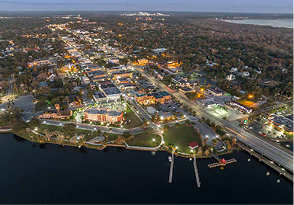
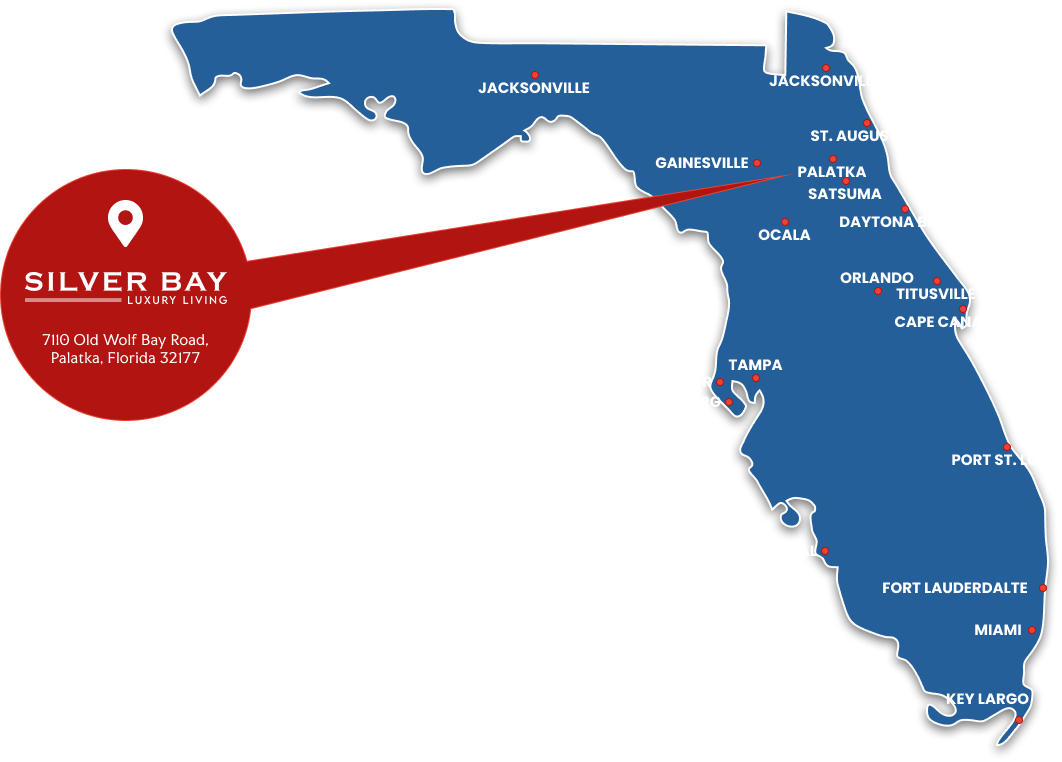
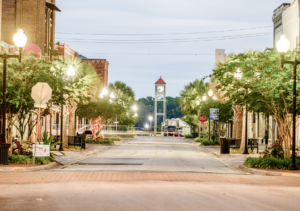
Moving to a 55+ community doesn't mean you're confined there, historic downtown Palatka is an exciting place to explore once you've settled in from your move.
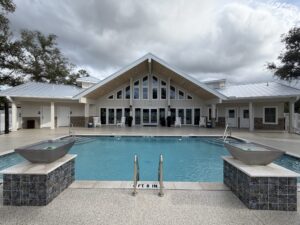
Then Friday arrives, and the house has a few extra pairs of shoes by the door. The grandkids are visiting, which means the usual quiet morning feels more energetic. Everyone heads toward the pool, gathers around the community grills for lunch, and settles into an afternoon that doesn't need much planning.
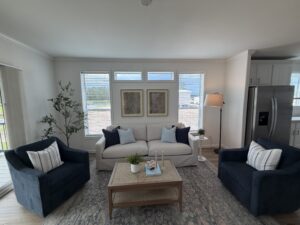
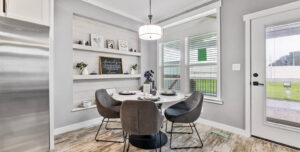
The guest bedroom is ready, and there is room to spread out without turning the whole house upside down. Later, you can head out together and make a day of it. Palatka gives visiting family plenty to do, while St. Augustine and Jacksonville are close enough for a change of scenery. You can even keep a running list of things to do in Palatka year-round for the next visit. Then everyone comes back home, tired from the day and ready to relax at a home that fits them all.
The Neighbors
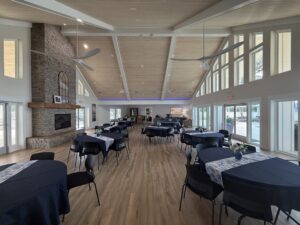
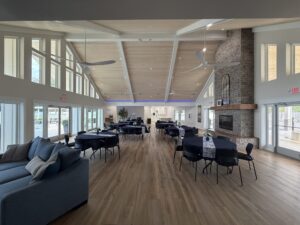
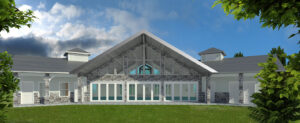
The Silver Bay clubhouse creates a comfortable setting for neighbors to gather, catch up, and spend time together.
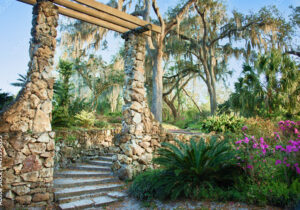
A funny thing happens when you live around people who are in a similar place in life: casual conversations turn into friendships. You see the same faces on the walking paths, at the clubhouse, or gathered around the fire pit, and those familiar hellos gradually turn into actual plans.
Maybe a neighbor joins you for a walk. Maybe a quick conversation outside turns into an invitation to game night. Before long, you have people nearby who know your name, remember what you were talking about last week, and notice when you haven't made it to the usual gathering.
That social rhythm turns making new friends after retirement feel much less intimidating. You don't have to arrive knowing anyone or sign up for every activity on the calendar. Shared spaces and regular routines naturally put people in the same places, giving friendships room to develop at their own pace.
A Tuesday With Nothing Planned

A lighter to-do list leaves more room for hobbies, outings, and the activities you enjoy.
Tuesday is the kind of day that shows what low-maintenance living actually feels like. There is no lawn to mow, no weekend project waiting in the garage, and no running list of repairs competing for your attention.
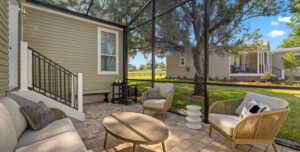
That quiet can take some getting used to. After years of keeping up with a house, having an afternoon with nothing on the calendar feels surprisingly refreshing. Read for a while. Sit outside. Head back to the clubhouse. Call a friend. The day doesn't need to be filled just because the hours are there.
That slower rhythm gets right to the heart of whether a 55+ community is right for you. Some people love having projects waiting around the house. Others would rather spend Tuesday afternoon doing anything but yard work. At Silver Bay, your home can be the place you return to after a full day, rather than another item on the day's agenda.
What Residents at Villa Farms Say
The experiences shared by Villa Farms residents give these everyday scenes some real context. Their comments explain a community where people feel comfortable looking out for one another, settle into familiar routines, and find social connections without needing to force them.
There is also a noticeable sense of ease in the way residents describe their days. They talk about enjoying their surroundings, spending time with people they have gotten to know, and feeling settled in their homes. Those details bring the idea of community life down to earth. Silver Bay builds on that foundation, carrying the welcoming atmosphere and neighborly spirit of Villa Farms into a community of its own.
Active Adult Community Life Silver Bay Palatka: The Little Things Add Up

Active adult living at Silver Bay means there is always room to get outside, pick up a paddle, and play a few rounds of pickleball.
The appeal of community life isn't always found in the big plans. Sometimes it is the comfort of recognizing a neighbor, knowing there is somewhere to go when you want to be social, and feeling at home during a quiet afternoon. That balance is what gives active adult community life at Silver Bay Palatka its character.
Silver Bay is a place where your days get to be your own. You bring your routines, your interests, your people, and your sense of what makes a good day. Villa Farms residents have shown us what that looks like in practice, and Silver Bay carries that same approach in its own setting.
Frequently Asked Questions
What amenities does Silver Bay Palatka have?
Silver Bay features a clubhouse, entertainment area, pool, community grills, fire pit, walking paths, and a borrowing library.
What activities are available at Silver Bay?
Activities include bingo, game nights, movies, cookouts, and firepit gatherings, alongside plenty of free time at home.
Is Silver Bay a good place to retire?
Silver Bay suits people who enjoy community activities, shared spaces, and less outdoor upkeep. Your preferred daily routine is the best guide.
What is the community like at Silver Bay Palatka?
Active adult community life at Silver Bay Palatka centers on familiar faces, casual conversations, shared activities, and time to yourself. Villa Farms resident experiences reflect the neighborly environment Silver Bay strives to create.
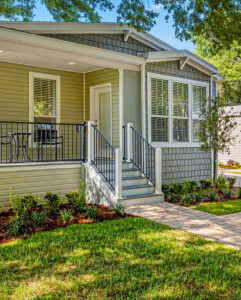
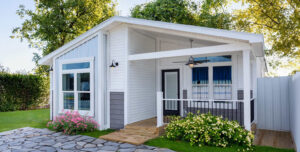
One of nine Silver Bay floor plans, this manufactured home features a welcoming front porch and landscaped yard.
How do I schedule a tour of Silver Bay?
You can schedule a tour through Silver Bay's contact page and see the homes, shared spaces, and community in person.
See Your Week at Silver Bay for Yourself
You can read about Silver Bay, scroll through photos, and learn how the community works, but none of that quite captures what an ordinary day there feels like. The real test is seeing how the setting fits your own habits, interests, and idea of what retirement should look like.
The best way to know if active adult community life at Silver Bay is right for you is to come see it. When you're ready, schedule a tour and spend an hour getting to know the community to decide if it is where you want to enjoy your retirement.
Disclaimer: Every effort is made to ensure the accuracy of the information in this article. Please credit silverbaypalatka.com when sharing and reposting.