• FAQ
  • Contact Us
  • Portal
  • Call us: 386-242-2488
silver-bay-logo

Silver Bay

Luxury Living

  • Welcome
  • Our Homes
  • Amenities
  • Location
  • Silver Bay Living
  • Property Map

Active, maintenance-free lifestyle in a vibrant community for your comfort and enjoyment.

7110 Old Wolf Bay Rd., Palatka, FL 32177
CALL US: 386-242-2488

fb icon ig icon

Call Us
Map
FAQ

Budgeting

Renting vs. Owning in a 55+ Community: Which Makes More Financial Sense?

September 4, 2026 by madison

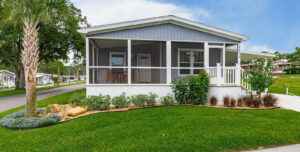
Silver Bay model manufactured home with a covered carport, front porch, landscaped yard, and wooded area behind it.

Renting comes with rules about what you can change. Owning your Silver Bay home gives you the ability to make it your own.

A monthly housing payment tells you what leaves your bank account. It doesn’t tell you what you have to show for that money five or 10 years down the road. That difference matters when you are comparing rental communities, traditional homeownership, and a 55+ community such as Silver Bay.

Renting keeps the upfront cost down, but the money going toward rent does not build equity in your home. Buying a traditional house gives you ownership of the house and land, yet you also take on property taxes, maintenance, and the larger purchase price that comes with owning both. Silver Bay takes a middle route: you purchase the home, lease the land, and build equity in the home while paying a monthly lot lease. That makes renting vs owning in a 55+ community retirement more than a question of which monthly payment looks lower.

Pure Renting: The Flexibility Argument
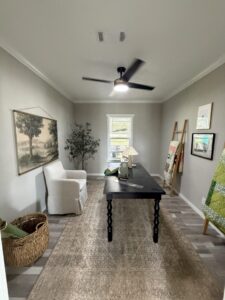
Furnished interior of a Silver Bay model home with a desk, chairs, ceiling fan, artwork, and neutral decor.

From hanging artwork to choosing finishes, renters may have limits on what they can change inside the home.

Renting has a straightforward appeal. You pay for the time you live there, then you leave when the lease ends. You do not need to come up with a large purchase price, and selling a property is not something you have to worry about later.

The tradeoff shows up over time. Rent payments do not build equity, and rent increases can raise your housing costs without increasing your ownership stake. A rental home also comes with limits on changes you can make, since major updates usually depend on the property owner's rules and approval.

Traditional Homeownership in Retirement: What You Keep

Buying a traditional home gives you ownership of both the house and the land beneath it. Mortgage payments may build equity, and once the mortgage is paid off, the property itself remains an asset you can sell, leave to family, or use as part of your financial plans. You also have much more control over the property, from renovations and landscaping to the way you use each room.

That ownership comes with a longer list of bills and responsibilities. Property taxes are part of the cost of owning the home, and you are responsible for repairs, maintenance, landscaping, and major expenses as the property ages.
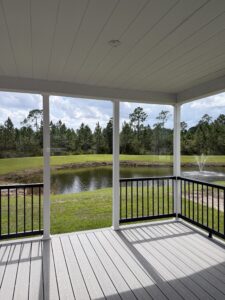
Covered porch at Silver Bay overlooking a pond and wooded landscape.

Leasing the land keeps the focus on what you actually own at Silver Bay, from the front door to the porch where you spend your afternoons.

Traditional homeownership also does not automatically put you in a 55+ community. You may have control over your property while handling the social side of retirement on your own. Having a built-in community changes that by putting neighbors, shared spaces, and social activities right in the neighborhood.

The Silver Bay Model: Own the Home, Lease the Land

Silver Bay works differently from both a rental community and a traditional neighborhood. You purchase your manufactured home, but you do not purchase the land beneath it. Instead, residents pay a monthly lot lease for their homesite.

That setup lowers the amount needed to get into homeownership because the purchase price covers the home rather than a house and a parcel of land together. The home is entirely yours, and as you pay for it, you build equity in the property.

The monthly lot lease is a separate expense. It covers the use of your homesite and is part of what it costs to live at Silver Bay, while the home itself remains your property. The financial side also becomes easier to follow once you look at the two costs individually. Your home is an asset you may eventually sell, while the lot lease is a housing expense.

Side-by-Side Cost Comparison

CategoryRenting in a 55+ Community*Owning at Silver Bay**Traditional Homeownership
Starting purchase / down payment$0$45,000$39,976
Starting monthly housing cost$1,379$1,758$1,810
Estimated 10-year cash paid$172,345$255,950$280,000
What you own after 10 yearsNothingThe homeThe home and land


Housing costs also include expenses that do not show up in a basic monthly rent or mortgage figure. The difference between lot rent vs HOA fees vs property taxes comes down to who owns the property and which costs fall on the resident.

Which Model Is Right for Different Situations

Start by evaluating your budget. Renting may appeal to a household that wants to keep more savings available rather than putting money into a home. Buying requires more money upfront, but those payments go toward an owned property. Monthly expenses also belong in the calculation, especially taxes, insurance, maintenance, lot rent, and rent increases.
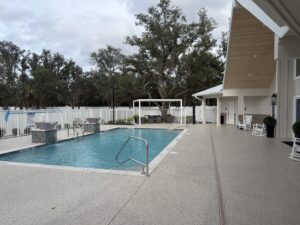
Swimming pool and pool deck at Silver Bay, with lounge seating, a covered area, and community buildings surrounding the pool.

The Silver Bay pool is one of those shared amenities that comes with the community, giving residents a place to cool off without leaving home.

Next, think about how long you expect to stay. A move within a few years may make renting easier to justify. A longer stay gives an owned home more time to build equity. The maintenance side fits naturally into the ownership question, since renters can call the landlord when something breaks while homeowners take on the repairs themselves.

Family plans can shift the decision, too. A household hoping to leave a property to children may place more value on ownership, while a future move closer to family could make flexibility more important.

For buyers who want to own the home without purchasing the land, 55+ communities like Silver Bay are the perfect option. You own the manufactured home and build equity in it, while leasing the land keeps the purchase from including a homesite. The Silver Bay floor plans give you a chance to see what that ownership model looks like in practice.

Renting vs Owning 55+ Community Retirement: Which Fits You?

The biggest surprise in this comparison may be how little the word rent tells you about the actual cost of housing. A lower monthly payment does not automatically mean you spend less over a decade, just as a higher payment does not mean you are making a better investment. The money has to be viewed alongside your long-term retirement goals.

That makes the renting vs owning in a 55+ community retirement question less about picking a winner and more about deciding where you want your housing dollars to land. Silver Bay puts homeownership on the table without requiring a land purchase. Our complete guide to 55+ communities takes that comparison outside the price tag and into the details of how these communities actually work.

Frequently Asked Questions

Do you own your home in a manufactured home community?

Yes. In a land-lease community such as Silver Bay, you own the manufactured home you purchase while leasing the land beneath it. The home is your property, and you may build equity as you pay down any financing.

Is lot rent the same as renting?

No. Lot rent covers the use of the land where your manufactured home sits. Renting a home means you pay for the right to live in the home itself without owning it. With lot rent, the home remains yours.

Can you build equity in a manufactured home?

Yes. A manufactured home is an owned asset, so you can build equity as you pay down the loan. Changes in the home's value can also affect your equity over time.

What happens to your home when you leave a 55+ community?

That depends on the community and how the home is sold. At Silver Bay, a resident who moves can sell the manufactured home, subject to the community's applicable rules and requirements. The land remains with the community because residents lease their homesites rather than own them.

Is it worth buying a manufactured home in a 55+ community?

For someone comparing renting vs owning in a 55+ community retirement, buying may make sense when you plan to stay long enough to build equity and want an owned home rather than a rental. Silver Bay also separates the home purchase from the land, which changes the upfront cost and ongoing expenses.

historic downtown palatka img

Moving to a 55+ community doesn't mean you're confined there, historic downtown Palatka is an exciting place to explore once you've settled in from your move.

Ready to Compare Your Options?

A move into a 55+ community is a financial decision, but it is also a practical one. The way you spend your money affects how much responsibility you carry, how much flexibility you have later, and what you can do with the rest of your budget. Your housing choice should do more than make sense on paper and also feel workable in real life.

Still weighing renting vs owning 55+ community retirement housing? Contact Silver Bay to talk through our ownership model, current home availability, and what the numbers could look like for you.

Disclaimer: Every effort is made to ensure the accuracy of the information in this article. Please credit silverbaypalatka.com when sharing and reposting.


Filed Under: Budgeting, Community Tagged With: Active Senior Living, retirement, SilverBayPalatka

Planning Retirement Housing Costs at 55: Getting an Early Start

August 14, 2026 by madison

Silver Bay clubhouse and pool area with outdoor seating.

Silver Bay’s clubhouse and pool offer a look at the community amenities worth factoring into your retirement housing research.

Housing is one of the biggest retirement expenses you'll plan for, yet it's surprisingly easy to leave it until the last minute. Many people don't begin comparing communities, home prices, or monthly costs until they've already decided it's time to move. By then, the timeline is driving the decision instead of the other way around.

That's why planning retirement housing costs early gives you an advantage. Starting your research a few years before retirement creates room to compare housing expenses, evaluate communities, and understand how each option fits into your long-term budget. Rather than making decisions under a tight timeline, you have the freedom to weigh your choices carefully and choose a home that truly fits your financial plans.

Why Retirement Housing Costs Are Different From What You're Used To

Senior couple reviewing household bills and financial documents together on a laptop at home

Senior couple managing household finances and reviewing retirement budget documents together at home.

Housing costs don't retire when you do, but the way you budget for them changes. During your working years, an unexpected repair or a seasonal increase in utility costs may be manageable. Once you're living on retirement income, those same expenses become part of your lasting monthly budget, making consistency more valuable than ever.

Traditional homeownership usually includes a mortgage, property taxes, homeowners insurance, along with ongoing maintenance. Even after a mortgage is paid off, regular upkeep continues, from replacing a roof to maintaining the yard and keeping the exterior in good condition.

Manufactured home communities such as Silver Bay use a different cost structure. Instead of paying a mortgage on both the home and the land, residents purchase the home and pay a monthly lot rent for the homesite and community amenities. If you're unfamiliar with how all these expenses compare, our guide to lot rent vs HOA fees vs property taxes explains in more detail.

The Financial Advantages of Planning Early

Starting your search a few years before retirement gives you a wider selection of homes to consider. Popular floor plans and desirable homesites don't always remain available indefinitely, so researching communities early gives you more flexibility.

An extended timeline benefits your finances as well. There would be no rush to list your current home because retirement is only weeks away, and you'd have time to watch the market and prepare your home for sale. It also gives you the chance to work with your financial advisor to understand how the proceeds fit into your retirement income strategy while comparing current home prices and monthly housing costs.

What to Budget for in a 55+ Manufactured Home Community

Silver Springs 5006 manufactured home with screened front porch and landscaped yard at Silver Bay

The Silver Springs 5006 pairs a spacious screened porch with a landscaped yard and inviting outdoor living space.

Creating a retirement housing budget starts with factoring in every recurring expense, not just the purchase price. At Silver Bay, new manufactured homes generally range from $225,000 to $250,000, depending on the floor plan, size, features, and location within the community. Considering those factors together and browsing the available Silver Bay floor plans is a more realistic starting point than focusing on a single listing price.

Beyond the home itself, you'll also want to budget for monthly lot rent, utilities, homeowners insurance, and routine home maintenance. Annual projects like refreshing mulch, pressure washing the exterior, and other seasonal upkeep are still part of homeownership, even in a maintenance-focused community. For a closer breakdown of recurring expenses, see what it costs to live at Silver Bay before building your retirement budget.

How to Compare the Cost of Staying vs. Moving

Start by listing the expenses tied to your current home. Include your mortgage or remaining loan balance, property taxes, homeowners insurance, utilities, lawn care, and routine maintenance. Larger projects, such as replacing a roof or updating an HVAC system, should also be included even if they only come up every few years.

Then compare those figures with a 55+ manufactured home community like Silver Bay. Along with the purchase price of the home, include monthly lot rent, utilities, homeowners insurance, and any ongoing maintenance that remains your responsibility. Because many exterior services and community amenities are covered through lot rent, the overall cost structure may look quite different from maintaining a larger traditional home. Writing these expenses down side by side highlights where your money is going today and how those costs might change if you decide to move.

Questions to Ask a Financial Advisor Before You Decide

  • How much of my retirement income should realistically be allocated to housing each month?
  • How would selling my current home affect my retirement savings and long-term financial plan?
  • Should I use proceeds from my home sale toward purchasing my next home, or are there other strategies worth discussing?
  • How would a move affect my monthly cash flow during retirement?
  • Are there tax considerations I should be aware of before buying a manufactured home?
  • Based on my retirement income, what housing budget would leave room for travel, hobbies, healthcare, and other priorities?

Planning Retirement Housing Costs Early Is Really About Buying Yourself Time

Retired couple sitting outdoors and talking together during a sunny afternoon

Retirement housing decisions are more than monthly costs. It means finding the right space for the activities and experiences that matter to you.

Time is something you can't add back to your retirement planning once important decisions begin stacking up. Researching housing a few years ahead of retirement gives you time to compare costs, organize your finances, and evaluate your options on a schedule that works for you.

Housing costs are only one part of planning retirement housing costs early. Our complete guide to 55+ communities explains the community features and living arrangements that numbers alone can't show. The more complete your research, the easier it becomes to treat your future home as part of your retirement plan instead of an afterthought.

Frequently Asked Questions

When should I start planning retirement housing?

Starting two to three years before retirement gives you time to research communities, organize your finances, and compare housing options. Planning retirement housing costs early also makes it easier to see how future housing expenses fit into your retirement budget.

How much should I budget for housing in retirement?

Your budget should include the home purchase, monthly housing costs, utilities, insurance, and ongoing maintenance. Looking at every expense creates a more accurate estimate than focusing on a single monthly payment.

Is it cheaper to own a manufactured home than a traditional home in retirement?

It depends on your current housing costs. Comparing taxes, insurance, utilities, maintenance, and monthly community costs provides a more complete picture than comparing home prices alone.

How does downsizing affect my retirement savings?

Downsizing may reduce ongoing housing expenses and free up equity from your current home. A financial advisor can help you determine how that fits into your retirement plan.

Can I afford to retire at 55?

That depends on your retirement savings, expected income, healthcare costs, housing expenses, and overall financial plan. Taking time to review those factors can help you decide whether retiring at 55 is financially realistic.

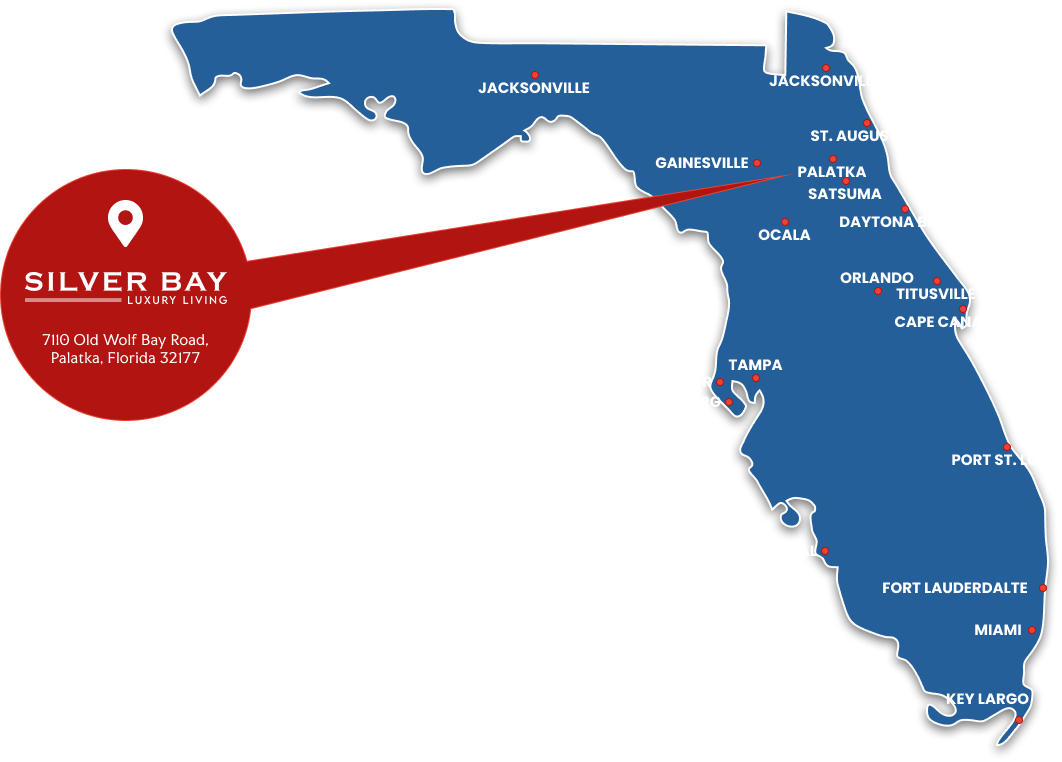
Map showing Silver Bay in Palatka, Florida, with its location marked in relation to cities across the state

Located centrally in Florida, Silver Bay in Palatka offers both the tranquility of small-town life and proximity to major attractions.

Good Decisions Start With Good Information

One of the easiest parts of planning retirement housing costs early is asking questions before making the move. Learning about pricing, current availability, and housing options today doesn't commit you to anything, but it can make future decisions easier.

Ready to continue your search? Contact Silver Bay to learn about our active adult community. We're happy to answer your questions and help you decide whether Silver Bay is the right match for your retirement plans.

Disclaimer: Every effort is made to ensure the accuracy of the information in this article. Please credit silverbaypalatka.com when sharing and reposting.
Filed Under: Active Adult Living, Budgeting Tagged With: Active Living, retirement, SilverBayPalatka

Lot Rent vs HOA Fees vs Property Taxes: Which Costs Less in Retirement?

April 21, 2026 by anoadmin

Housing costs are the number one thing that keeps soon-to-be retirees up at night, and rightly so. If you’re researching 55 plus communities in Florida, you’re already thinking smart. But even after the mortgage is paid off, the bills keep coming. Lot rent, HOA fees, property taxes, they’re not the same thing, they cover different things, and the one that looks cheapest on paper is rarely the best deal when you add everything up. Here’s a breakdown of each option, and which one offers the best value, stability, and peace of mind on a fixed income.

Understanding Lot Rent: The Smart Manufactured Home Option

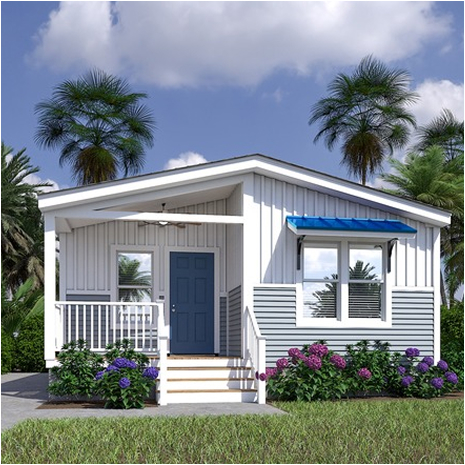
Exterior view of Hayden style manufactured home.

Exterior view of Hayden style manufactured home.

Lot rent is what you pay when you own a manufactured home but lease the land it sits on. You own your home outright, you’re just not tied to property ownership with all its hidden costs. In Florida, lot rent typically runs $400 to $1,200 per month; mid-range communities near cities land at $500 to $800.

Your monthly payment covers the land, lawn mowing, irrigation, fertilizing, clubhouse access, pool maintenance, common area landscaping, and street lights. Utilities are individually metered; interior and exterior home maintenance is the resident’s responsibility. One predictable number replaces a dozen separate bills: no property tax surprises, no landscaping quotes, no guessing. Now, let’s be honest: lot rent can increase over time and Florida has no cap on increases. But when you factor in everything it includes, most retirees find it’s still the better deal.

HOA Fees: The Condo Conundrum

Homeowners Association fees are what you pay when you buy a condo or home in a planned community. Florida’s statewide average is around $230 per month, but condos average $400 to $800, and in Miami owners pay $835 to $965. And that’s before property taxes, which you still owe on top.

The real danger is special assessments, aka one-time charges for major repairs. Some Florida condo owners have faced bills up to $100,000. Unlike lot rent communities where maintenance is handled proactively, HOAs often defer until it’s a crisis and then pass the bill to residents. HOAs can also raise fees with little notice, restrict how you use your property, and place a lien on your home if you fall behind.

Property Taxes: The Hidden Money Pit

Property taxes are based on your home’s assessed value. In Florida, the average effective rate is around 0.82% — roughly $2,460 per year on a $300,000 home, or about $205 per month. Homestead exemptions can reduce taxable value by up to $50,000, which helps. On paper, this looks like the cheapest option.

But you’re on your own for everything else. New AC: $5,000–$10,000. Roof replacement: $10,000–$20,000. Plumbing emergency: $2,000–$5,000. Add lawn care, landscaping, gutters, and the general physical burden of maintaining a home — and that $2,040 annual tax bill easily balloons to $6,000, $8,000, or $10,000+ per year.

The Real Cost Comparison

Option 1: Manufactured Home with Lot Rent

  • Upfront cost: $225,000–$250,000 | Monthly lot rent: $550–$650
  • Annual cost: $6,000–$8,400 | Includes: land, lawn care, amenities
  • Hidden costs: Minimal (home insurance and utilities)

Option 2: Condo with HOA Fees

  • Upfront cost: $200,000 | Monthly HOA: $500 | Annual property tax: $1,640
  • Annual total: $7,640 | Hidden costs: Special assessments up to $100,000+ | Risk: HIGH

Option 3: Single-Family Home

  • Upfront cost: $300,000 | Annual property tax: $2,040
  • What you actually pay: $6,000–$12,000+ with maintenance | Risk: VERY HIGH

Side-by-Side: Quick Reference


Lot RentHOA FeesProperty Taxes Only
Monthly cost (FL)$500–$800$230–$900+ (condos higher)$170–$420 tax; $500–$1,000+ all-in
What’s includedLand, Lawn care, community amenitiesCommon areas, some exteriorNothing extra
Maintenance responsibilityCommunity handles lawn & amenitiesExterior common areas; interior is yoursAll yours
PredictabilityFixed monthly; gradual increasesIncreases + unpredictable assessmentsRises with assessed value
FlexibilityOwn home, lease landOwn home and land (or unit)Full ownership
Special assessment risk?NoneYes — up to $100,000+No

The Florida Factor and Why Predictability Matters

About 43% of Florida homeowners live in an HOA community, nearly double the national average. Condo fees rose more than 15% year-over-year in Tampa, Orlando, and Fort Lauderdale after the Surfside laws took effect. Property taxes also vary widely: on a $300,000 home, annual taxes run approximately $4,116 in St. Johns County and $5,002 in Orange County. Putnam County, where Silver Bay is located, comes in below both, which is one reason retirees looking for value in Northeast Florida end up here. Silver Bay also offers residents the advantage of a more predictable cost structure, with one consistent monthly payment and fewer of the unexpected financial burdens that often come with traditional homeownership or condominium living.

For retirees on a fixed income, the difference between a known monthly number and an unpredictable one is not just financial, it is psychological. A surprise $8,000 special assessment can upend a carefully planned retirement budget in ways that take years to recover from. Lot rent offers one predictable payment with no reserve fund exposure, no inspection levies, and no reassessment surprises.

Why Lot Rent Makes Sense and What Silver Bay Offers

Lower upfront investment keeps $120,000–$190,000 in your savings. Your lawn is mowed, landscaping is maintained, and your community amenities are included, all without the HOA drama or special assessments. One monthly payment replaces a dozen bills. And as you age, the physical demands of homeownership grow.

At Silver Bay Palatka, monthly lot rent includes lawn care, a private clubhouse, a resort-style pool, and onsite handyman services. Our homes offer 9+ floor plans with open layouts, tall ceilings, and modern, quality finishes. The location puts you minutes from shopping, dining, medical facilities, and parks. As the sister community of Villa Farms – winner of the Palatka Daily News Readers’ Choice award for Best Retirement Community since 2008 – Silver Bay brings proven quality and real community feel.

Making Your Decision

Senior couple reviewing household bills and financial documents together on a laptop at home

Retirement housing costs are about more than monthly payments, they are about long-term value, predictability, and peace of mind.

The cheapest option isn’t the one with the lowest monthly number, it’s the one that gives you the most value, the least stress, and the freedom to truly enjoy retirement. Property taxes alone might run $2,040 per year, but add maintenance, repairs, and lawn care and you’re easily at $6,000–$12,000. Condos average $7,640 per year with full special assessment exposure on top. Lot rent at $6,000–$8,400 per year gives you maintenance-free living, great community amenities, and predictability. That’s the difference and that’s what Silver Bay delivers.

Summary

For retirees evaluating housing costs in Florida, the real question is not just what costs less each month, but which option offers the most long-term value, predictability, and peace of mind. This comparison breaks down the differences between lot rent, HOA fees, and traditional property taxes, showing how unexpected maintenance costs, rising condo fees, and special assessments can dramatically increase the true cost of retirement living. At Silver Bay, residents benefit from a simpler and more predictable approach, with one monthly payment that includes lawn care and community amenities, without the financial uncertainty often associated with HOA and condo living.

Frequently Asked Questions

What is the difference between lot rent and HOA fees?

Lot rent is a fixed monthly payment in a land-lease community, you own the home and lease the land. HOA fees apply when you own both home and land (or a condo unit). HOA fees fund shared maintenance but vary widely, increase frequently, and carry the risk of large special assessments.

Do you pay property taxes in a manufactured home land-lease community?

Not on the land. The community owns the lot and handles those property taxes. You pay a modest annual tax on the home itself, paid to the state and is estimated at $110 annually, coming in considerably lower than full property taxes on a land-and-home parcel.

Are HOA fees going up in Florida?

Yes, significantly. New inspection and reserve-fund laws following the 2021 Surfside collapse pushed condo fees up more than 15% year-over-year in several major Florida markets. Some owners have received special assessment bills exceeding $100,000.

What does lot rent include at Silver Bay?

Lawn mowing, irrigation, fertilizing, clubhouse access, pool maintenance, common area landscaping, and street lights. Utilities are individually metered; interior and exterior home maintenance is the resident’s responsibility. Full details on the amenities page.

Is lot rent cheaper than HOA fees in Florida?

For comparable amenities, yes especially compared to condos, where HOA fees plus property taxes routinely exceed lot rent totals. The meaningful comparison is total monthly cost including what’s covered, not just the headline fee.

If you have more questions, please visit our Frequently Asked Questions (FAQ) page. Or contact us today to schedule a visit!


Filed Under: Active Adult Living, Budgeting

What Does It Really Cost to Live at Silver Bay? An Honest Monthly Breakdown

April 14, 2026 by anoadmin

Here's what a typical Silver Bay resident pays per month: $550-$650. This number is your lot rent. That figure will make more sense once you see what's inside it, so let's break it down piece by piece.

The Silver Bay Cost Model Explained

Retired couple calculating monthly home budget with bills and calculator at wooden table

Retired couple calculating monthly expenses and reviewing a budget.

Silver Bay runs on a land-lease model, which means you own your home and lease the lot it sits on. There's no property tax bill, no HOA assessment, and no surprise maintenance invoices for the pool or the lawn - those are handled. What you're left with is a monthly cost that's predictable, transparent, and in most cases significantly lower than what you were paying to maintain a larger home.

Home Purchase Cost

Homes at Silver Bay are priced from approximately $225,000 to $250,000 across nine floor plans ranging from 1,029 to 1,600 square feet. This is a one-time purchase: not a rental, not a lease payment. You own the home outright. Financing may be available depending on your situation — see Silver Bay's floor plans and home options for the full range.

Monthly Lot Rent

Lot rent at Silver Bay is anywhere from $550 to $650 per month. That's the single monthly payment that keeps your lot maintained and your community amenities running.

What lot rent covers: lawn mowing, irrigation system operation, fertilizing schedule, clubhouse access and upkeep, pool maintenance, common area landscaping, and streetlights. In practical terms, the things that consumed your weekends at your last house are simply not your problem anymore.

For a side-by-side look at how lot rent compares to HOA fees and property taxes, see our article on lot rent vs. HOA fees vs. property taxes.

Utilities

Utilities at Silver Bay are individually metered, meaning you pay for exactly what you use, nothing more, nothing less. There's no shared utility pool where one neighbor's habits affect your bill.

City water and sewer are individually metered and so is the electricity. Cable and internet are available through local providers. Electricity cost will vary by season, home size, and personal habits: a snowbird who's away for three months will see different numbers than a full-time resident running the AC in August.

What's Not Included

Transparency goes both ways. Here's what lot rent doesn't cover, so there are no surprises after move-in.

Annual mulching and pressure washing are things residents handle once a year. Interior home maintenance: paint, fixtures, appliances, flooring, or anything inside your four walls is yours to manage, in addition to certain exterior home maintenance, such as if the siding needs attention or the roof needs repair. Specific home repairs fall on the homeowner as they arise, and you are responsible for personal insurance on the home and its contents.

How Silver Bay Compares to Staying in Your Current Home

Exterior view of Hayden style manufactured home.

Most people who move to Silver Bay are coming from a home they've owned for 20 or 30 years. The comparison isn't just total monthly cost, it's also total burden.

A typical homeowner in Florida pays property taxes, carries homeowner's insurance, pays for lawn care or does it themselves, handles all exterior and interior maintenance, and manages utilities on a home that's often two to three times the size of a Silver Bay floor plan. Add it up and the gap between "staying" and "moving" is often narrower than people expect.

The cleaner way to think about it: at Silver Bay, you're paying a known monthly number for a maintained home in an active community. At your current house, you're paying an unpredictable mix of taxes, maintenance, and services, for rooms you probably don't fully use.

Summary

The cost to live in a 55+ community in Florida varies significantly by community type and location. At Silver Bay, the land-lease model keeps costs predictable and entry prices lower than traditional homeownership. A typical resident's monthly expenses include lot rent of $550-$650 plus individually metered utilities. Home purchase prices range from $225,000 to $250,000 across nine floor plans. Lot rent covers lawn care, irrigation, fertilizing, pool maintenance, clubhouse access, common areas, and streetlights. Residents are responsible for interior and exterior home maintenance, annual mulching and pressure washing, and utilities. For most retirees downsizing from a larger home, the all-in monthly cost at Silver Bay compares favorably.

Frequently Asked Questions

What is lot rent and does it increase?

Lot rent is a set monthly payment Silver Bay residents make to lease the lot/land their home sits on. It covers lawn care, community amenities, and common area maintenance. It can increase on an annual basis but a notice will be provided before any increases.

Do I own the home at Silver Bay?

Yes. You own the home outright. Silver Bay owns the land which you lease through your monthly lot rent. This is the standard land-lease model used by manufactured home communities across the country, and it's what keeps entry costs lower than purchasing land and home together.

Are utilities included in lot rent?

No. Utilities - water, sewer, and electricity - are individually metered and billed separately. Cable and internet are available through local providers at your own cost.

What is the total monthly cost at Silver Bay?

Your total monthly cost includes lot rent plus utilities plus any personal expenses (food, transportation, insurance, etc.). The housing-specific portion — lot rent plus utilities — varies by season and individual usage.

Can I finance a manufactured home at Silver Bay?

Yes, financing is available for manufactured homes at Silver Bay. Several lenders specialize in manufactured home loans, and the process can be very straightforward. Reach out to us and we can help get you started.

Want to Know What Your Specific Monthly Costs Would Look Like?

Every household is a little different: home size, utility habits, whether you're full-time or seasonal. The best way to get a number that's accurate for your situation is to talk to us directly. Schedule a tour or reach out here and we'll walk you through the complete picture before you make any decisions.

Filed Under: Active Adult Living, Budgeting

Lot Rent vs HOA Fees vs Property Taxes: Which Costs Less in Retirement?

December 8, 2025 by anoadmin

When comparing retirement housing costs in Florida, it’s important to look beyond the monthly payment alone. Lot rent, HOA fees, and property taxes all work differently — and some include services and amenities that can reduce other living expenses.

At Silver Bay, lot rent ranges from $550–$650 per month and includes lawn care, clubhouse access, and use of the community pool, helping retirees better manage their retirement budget.

Let’s talk about something that keeps a lot of soon-to-be retirees up at night: housing costs. If you’re researching 55 plus communities in Florida with low HOA fees, you’re already thinking smart about protecting your retirement budget. You’ve worked hard your whole life, and now you’re ready to enjoy retirement without constantly worrying about money. But here’s the thing—even when your mortgage is paid off, the bills don’t stop coming. Between lot rent, HOA fees, and property taxes, it can feel like you’re playing a never-ending game of “guess which expense is going to surprise me this month.”

If you’re trying to figure out which housing option will be easiest on your retirement wallet, you’re not alone. Let’s break down what you’re really paying for with each option, and more importantly, which one may offer the best value, stability, and peace of mind when managing a retirement budget.

Why Trust Silver Bay's Retirement Housing Insights?

At Silver Bay, we work directly with retirees and active adults evaluating housing costs, community fees, and long-term affordability. Our team regularly helps residents compare expenses such as lot rent, property taxes, homeowners association (HOA) fees, and homeownership costs when planning for retirement living.

The information in this article is based on industry research, current housing cost considerations, and our experience assisting residents in making informed retirement housing decisions.

Sources & References:

  • Internal Revenue Service (property tax information)
  • AARP (retirement planning resources)
  • Local and state property tax regulations applicable to retirement communities

Understanding Lot Rent: The Smart Manufactured Home Option

Exterior view of Hayden style manufactured home.

Lot rent is what you pay when you own a manufactured home but lease the land it sits on. Think of it as getting the best of both worlds: you own your beautiful home outright, but you're not tied down to property ownership with all its hidden costs and headaches.

In Florida, lot rent typically runs anywhere from $400 to $1,200 per month, depending on the community and amenities. Mid-range communities near cities usually run $500 to $800, which is where most retirees find the sweet spot.

Here's where lot rent really shines. Your monthly payment typically covers the land, water and sewer services, trash collection, lawn care and landscape maintenance (yes, someone else mows your grass!), and access to community amenities like a clubhouse or pool. Many communities even include cable TV or internet.

The beauty of this arrangement? You're paying one predictable monthly fee that bundles most of your housing needs together. No surprise property tax bills. No wondering if you budgeted enough for lawn care. No calling around for landscaping quotes. It's all included, which makes budgeting so much simpler.

Now, let's be honest. Lot rent can increase over time, and in Florida, there's no cap on increases. However, when you factor in what you're getting for that payment, many retirees find it's still a better deal than the alternatives. Plus, your upfront investment is dramatically lower, typically $60,000 to $80,000 compared to $200,000 to $250,000 for traditional housing.

HOA Fees: The Condo Conundrum

Homeowners Association fees are what you pay when you buy a condo or home in a planned community. In Florida, these fees have been climbing steadily, with the state-wide median around $230 per month. But condos average $400 to $800 monthly, and in Miami, owners pay $835 to $965 per month.

So what are you getting? HOA fees cover exterior maintenance, landscaping of common areas, amenities like pools and fitness centers, and trash collection. Sounds good, right?

But here's the problem: HOA fees are just the beginning of your housing costs. You're still paying full property taxes on top of those fees, which means you're essentially double-paying. And the fees themselves? They've been increasing dramatically. Following the 2021 Surfside condo collapse, new Florida laws require stricter building inspections and larger reserve funds. Many associations have raised dues significantly to comply.

And here's what really catches people off guard: special assessments. These are one-time charges for major repairs that can run into tens of thousands of dollars. Some Florida condo owners have faced bills up to $100,000 for major building repairs. Imagine getting that bill in retirement when you're on a fixed income. Unlike lot rent communities where maintenance is handled proactively, HOAs often defer maintenance until it becomes a crisis, then pass the massive bill to residents.

Plus, HOAs can raise fees with relatively short notice, and you have limited say beyond voting in elections. Some HOAs have rules that restrict how you can use your property. Fall behind on fees? The HOA can put a lien on your home.

Property Taxes: The Hidden Money Pit

Property taxes are what you pay to local government based on your property's assessed value. In Florida, the average effective rate is around 0.82%. For a $300,000 home, that's roughly $2,460 per year, or about $205 per month. Florida offers homestead exemptions that can reduce your taxable value by up to $50,000, which helps.

On the surface, this looks like the cheapest option. And if that's all you had to pay, it would be! But here's what the property tax number doesn't tell you: you're on your own for absolutely everything else.

A new air conditioner? $5,000 to $10,000. Roof replacement? $10,000 to $20,000. Plumbing emergency? $2,000 to $5,000. New water heater? $1,500 to $3,000. The list goes on. And unlike lot rent communities where maintenance is handled proactively, problems always seem to happen at the worst possible time.

Then there's the physical burden. You're responsible for mowing your lawn, maintaining your landscaping, cleaning your gutters, and handling all the day-to-day upkeep. Sure, you can hire someone, but now you're adding those costs on top of your property taxes. Suddenly that $2,040 annual property tax bill balloons to $6,000, $8,000, or $10,000+ per year when you factor in everything else.

The Real Cost Comparison

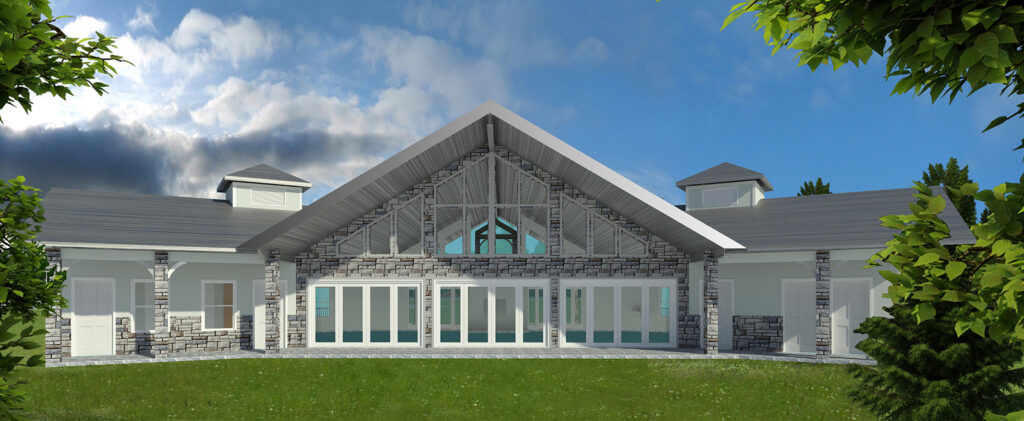
clubhouse and social center img

 Silver Bay clubhouse and social center

Let's look at what you're really getting for your money:

Option 1: Manufactured Home with Lot Rent

  • Upfront cost: $60,000 to $80,000 for a beautiful home
  • Monthly lot rent: $500 to $700 (includes lawn care, water, sewer, trash, amenities)
  • Annual cost: $6,000 to $8,400
  • What you get: Maintenance-free living, professional lawn care, amenities, community support
  • Hidden costs: Minimal (home insurance and utilities)

Option 2: Condo with HOA Fees

  • Upfront cost: $200,000
  • Monthly HOA fee: $500
  • Annual property tax: $1,640
  • Annual total: $7,640
  • Hidden costs: Special assessments ($10,000 to $100,000+), utilities, interior maintenance
  • Risk factor: HIGH

Option 3: Single-Family Home

  • Upfront cost: $250,000
  • Annual property tax: $2,040
  • What you actually pay: $6,000 to $12,000+ annually with maintenance
  • Hidden costs: Everything! (Roof, HVAC, plumbing, lawn care, landscaping)
  • Risk factor: VERY HIGH

When you look at it this way, the picture becomes clearer. Yes, property taxes alone are cheaper than lot rent. But you're not just paying taxes. You're paying for everything that lot rent already includes, plus taking on all the financial risk of major repairs and the physical burden of maintenance.

The condo option? You're paying nearly as much as lot rent (or more), plus property taxes, plus you're exposed to potentially massive special assessments. And you still don't get the care-free lifestyle that lot rent provides.

Why Lot Rent Makes Sense for Retirees

Here's what many retirees discover: lot rent offers the best combination of value, predictability, and peace of mind.

Lower upfront investment means more money in your pocket.

With $60,000 to $80,000 for a manufactured home versus $200,000 to $250,000 for traditional housing, you're keeping $120,000 to $190,000 in savings. That money can earn returns, provide an emergency cushion, or fund the retirement lifestyle you've been dreaming about.

True maintenance-free living.

Your lawn is mowed, your landscaping is maintained, common areas are cared for, and many minor repairs are handled by onsite staff. You're not spending your retirement on a ladder cleaning gutters or pushing a mower in the Florida heat.

Bundled services simplify budgeting.

Instead of separate bills for water, sewer, trash, lawn care, and trying to predict repair costs, you have one clear monthly payment. No surprises, no juggling multiple vendors.

Community amenities without the HOA drama.

You get the clubhouse, pool, social activities, and other amenities without the special assessments and restrictive rules that come with HOA living.

Age comfortably.

As you get older, the physical demands of homeownership become more challenging. Lot rent communities are designed for active adults and retirees, with services and support that grow with your needs.

Silver Bay Palatka: The Smart Retirement Choice

a group of happy seniors lined up doing a cancan kick

At Silver Bay Palatka, we've designed a community specifically for retirees who want the best value and the best lifestyle. Our residents enjoy beautifully designed manufactured homes with high-end finishes in a resort-style setting, without the financial stress and maintenance burden of traditional homeownership.

What sets Silver Bay apart? Your monthly lot rent includes lawn care and landscape maintenance, water and sewer services, trash collection, a private clubhouse featuring social and recreational events, a resort-style pool and outdoor green space, onsite handyman services for minor home repairs, and a supportive, secure neighborhood with friendly neighbors.

Home Features

Our homes feature spacious floor plans with tall ceilings and elegant trim work, open-concept layouts with natural light, and modern appliances and quality finishes. You can design your perfect retirement home without the $200,000+ price tag of traditional housing.

Growing Community

Silver Bay is currently under development with 100 home sites and expects to have homes available for occupancy in early 2026. As the sister community of Villa Farms (winner of Palatka Daily News' Readers' Choice award for Best Retirement Community since 2008), we bring proven quality and genuine community feel to the area.

Location is Key

The location is ideal, just a few miles from shopping centers, dining spots, top-rated medical facilities, and parks, golf courses, and nature trails. You get the tranquility of a resort-style community with the convenience of nearby amenities.

Making Your Decision

The best choice for your retirement isn't about finding the absolute lowest number on paper. It's about finding the best value for your money and the lifestyle that lets you actually enjoy retirement.

Consider these questions: How do you want to spend your time? Would you rather be relaxing by the pool with neighbors or on a ladder cleaning gutters? How much financial risk can you handle on a fixed income? What's your upfront budget? How important is community and built-in social opportunities?

When you look at the total picture, lot rent offers something that's hard to find elsewhere: true peace of mind. You know what you're paying each month. You know maintenance is handled. You know you're part of a community. And you know you made a smart financial decision that leaves you with money to actually enjoy retirement.

Let's be clear about what the numbers really tell us. Property taxes alone might be $2,040 per year, but add maintenance, lawn care, repairs, and inevitable system replacements, and you're easily spending $6,000 to $12,000 or more annually, plus carrying all the financial risk. Condos run $7,640 per year on average, plus exposure to special assessments. Lot rent at $6,000 to $8,400 per year gives you true maintenance-free living with no surprise six-figure bills.

The "cheapest" option isn't the one with the lowest monthly number. It's the one that gives you the most value, the least stress, and the freedom to enjoy the retirement you've worked so hard to achieve. That's what lot rent living offers, and that's what Silver Bay Palatka delivers.

If you have more questions, please visit our Frequently Asked Questions (FAQ) page. Or contact us today to schedule a visit!


Disclaimer: Every effort is made to ensure the accuracy of the information in this article. Please credit silverbaypalatka.com when sharing and re-posting.

FAQ's

Is lot rent considered rent or a fee?

Lot rent is typically a monthly fee paid for the land your home sits on within a manufactured home community. It may also include community amenities and maintenance services.

Can lot rent increase?

Yes, lot rent can increase over time depending on operating costs, market conditions, and community improvements. Residents are usually notified before changes take effect.

What does Silver Bay’s lot rent include?

Silver Bay’s lot rent includes lawn care, clubhouse access, swimming pool access, and maintenance of shared community spaces.

Filed Under: Budgeting, Community, Manufactured Homes, Palatka Tagged With: Lot Rent, Senior Living, SilverBayPalatka

silver bay logo v2

Silver Bay Luxury Living is now open, offering a vibrant 55+ community where residents can enjoy an active, care-free lifestyle without the responsibilities of traditional homeownership. Proudly family-owned and family-operated, and with 100 thoughtfully planned home sites, high-quality manufactured homes, and resort-style amenities, Silver Bay is ready to welcome you home in Palatka, Florida.

  • Welcome
  • Our Homes
  • Amenities
  • Location
  • Property Map
  • FAQ
  • Silver Bay Living
  • Contact Us
  • Portal
villa-farms-blue img
palatka logo

Silver Bay is proud to be the sister community of Villa Farms, Palatka Daily New’s Readers' Choice award winner for Best Retirement Community since 2008. Experience the same quality, community, and care-free living at Silver Bay.

Call Now
Schedule a Tour

© 2026. Silver Bay Luxury Living, Inc.
All Rights Reserved.
Website powered by AnoLogix.
Privacy Policy

Discover Palatka’s Newest 55+ Community

Silver Bay Grand Opening!

Come experience a community designed specifically for adults 55+. Tour our model homes, explore Silver Bay, meet our owners, and enjoy refreshments.

September 10th · 6:00 PM

7110 Old Wolf Bay Road, Palatka FL 32177

silverbay logo white

A premiere 55+
community in Palatka,
Florida — now open and welcoming new residents.

Contact us

7110 Old Wolf Bay Rd.
Palatka, FL 32177

386-242-2488

Ready to Tour
Silver Bay?

Experience our now-open 55+ community in Palatka, FL.

Ready to Tour
Silver Bay?

Share your contact information below, and a member of our team will call you to schedule your personal tour.

Experience our now-open 55+ community in Palatka. Share your contact information below, and a member of our team will call you to answer your questions and schedule your personal tour.

"*" indicates required fields

We’ll contact you soon to find a tour time that works best for you.